
how to replace car brake pads front is mostly a safety-and-prep job, if you rush the setup or skip a check, you can end up with squeaks, pulling, or a pedal that feels wrong.
Front pads typically wear faster than rear pads on many vehicles, and they do most of the stopping work, so getting this right matters, not just for noise, but for predictable braking in traffic.
What I’ll do here is keep it practical: tools you actually need, the step-by-step order that prevents headaches, a quick fitment table, and a few “stop and rethink” moments where it makes sense to call a pro.
Before you start: safety, fitment, and what you’re really replacing
Most DIY problems come from two places: working under a car that isn’t supported correctly, or buying pads that don’t match the caliper and rotor setup. Take five minutes here and you usually save an hour later.
Safety basics you should not compromise on
- Work on flat pavement, set the parking brake, and chock the rear wheels.
- Use jack stands, not just a jack, many accidents happen during “quick” jobs.
- Wear eye protection, brake dust and cleaner mist are not friendly.
According to NHTSA, safe vehicle support and proper maintenance are key factors in preventing vehicle-related injuries and crashes, if anything about lifting the car feels sketchy, stop and reset your setup.
Fitment quick-check: confirm year, make, model, trim, and whether you have standard brakes vs a larger “sport” package. If your car uses pad wear sensors, make sure the kit includes them or that your sensors are reusable.
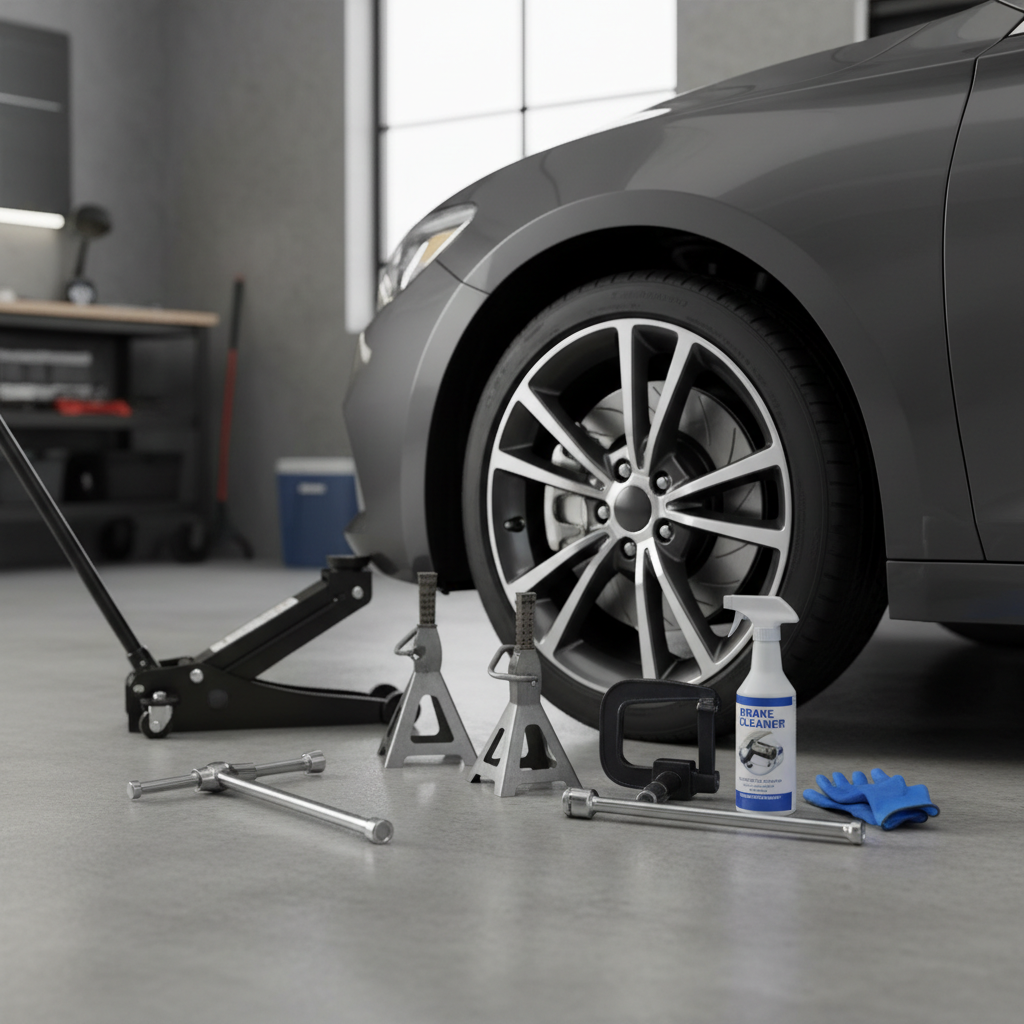
Tools and supplies checklist (and what you can skip)
You don’t need a massive tool cart, but a few items make this job cleaner and safer.
- Floor jack and jack stands
- Lug wrench or impact (optional), plus a torque wrench for reassembly
- Socket set, usually 12–19 mm depending on vehicle
- C-clamp or caliper piston tool, some rear brakes need a wind-back tool, front typically does not
- Brake cleaner, shop towels, nitrile gloves
- High-temp brake grease for slide pins and pad ears, use sparingly
- Wire brush, bungee cord or coat hanger to support the caliper
What you can often skip: anti-squeal spray if your pads already have shims, and “miracle” additives. If you need noise control, good shims plus correct lubrication usually beats gimmicks.
Self-check: do you only need pads, or pads plus rotors?
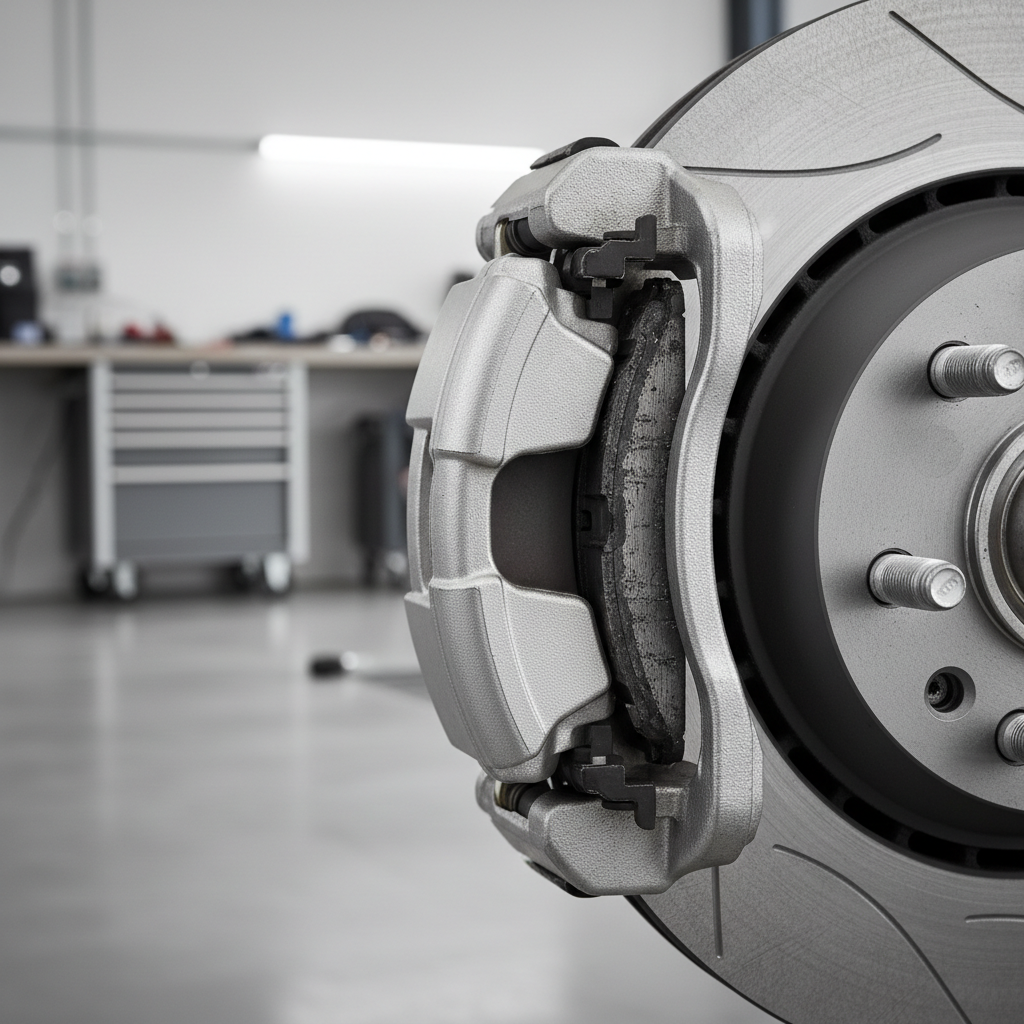
People search how to replace car brake pads front and assume it’s always “pads only.” Sometimes it is, but if the rotor surface is rough or the pad wore unevenly, you may be stacking new parts on a bad foundation.
Signs pads alone are often OK
- Rotor surface feels fairly smooth, no heavy ridges at the outer edge
- No steering wheel shake during braking
- Old pads show even wear side-to-side on that wheel
Signs you should plan for rotors (or at least measure)
- Pedal pulsation or vibration when braking from highway speed
- Deep grooves, hot spots, or visible cracking on the rotor
- One pad much thinner than its partner, can point to sticking slide pins
Practical rule: if you don’t have a micrometer and you see obvious rotor damage, swapping rotors with pads is usually simpler than guessing. If you’re unsure, a local shop can measure rotor thickness quickly, and that measurement matters more than opinions.
How to replace front brake pads step by step
This is the order that tends to keep things controlled. Minor details vary by vehicle, so check a service manual if your caliper design looks different from what you expect.
1) Loosen lug nuts, lift, and secure the car
- Crack lug nuts loose while the tire still touches the ground.
- Lift at the proper jacking point, set the car on stands, then remove the wheel.
2) Inspect the brake assembly before unbolting
- Look for torn caliper boots, leaking fluid, damaged brake hose routing.
- Check pad thickness and rotor condition so you’re not surprised mid-job.
3) Remove caliper bolts and support the caliper
- Remove the caliper slide bolts, then lift the caliper off the bracket.
- Do not let the caliper hang by the brake hose, support it with a bungee cord.
4) Remove old pads, then service the slide pins
- Pull the old pads and note any clips or shims orientation.
- Remove slide pins one at a time, wipe old grease, inspect for rust or pitting.
- Apply a thin coat of high-temp brake grease, then reinsert so pins move freely.
5) Retract the caliper piston
- Open the brake fluid reservoir cap loosely, it helps prevent pressure buildup.
- Use a C-clamp or piston tool against the old pad to press the piston back slowly.
If the piston refuses to move, don’t muscle it, that can hint at a seized caliper, and continuing may create a bigger safety issue.
6) Install new hardware and pads
- Install new abutment clips if provided, then clean pad contact points with brake cleaner.
- Add very small amounts of brake grease where pads slide on the bracket, keep grease off pad friction material and rotor.
- Seat the new pads into the bracket in the correct orientation.
7) Reinstall the caliper and torque bolts
- Lower the caliper over the new pads, reinstall slide bolts by hand first.
- Torque caliper bolts and wheel lug nuts to spec.
According to SAE International, correct torque practices are essential for fastener reliability, if you don’t have the torque spec, look it up by vehicle rather than guessing “tight enough.”
Torque, brake fluid, and bedding-in: the part many people rush
If you’re learning how to replace car brake pads front, this finishing section is where “it works” becomes “it feels right every day.”
Key points to finish safely
- Pump the brake pedal before moving the car, the first few pumps bring pads back into contact.
- Check brake fluid level, retracting pistons can raise the level, don’t overfill.
- Do a slow test in a safe area, listen for grinding, feel for pulling.
Bedding-in (break-in) in plain language
Many pads want a controlled heat cycle so the transfer layer forms evenly on the rotor. Follow the pad maker instructions when available, a common pattern is several moderate stops from around 30–40 mph with cool-down time, avoiding hard panic stops early unless safety requires it.

Quick reference table: common symptoms after pad replacement
This is the “sanity check” section, because small details create loud symptoms.
| What you notice | Common cause | What to do next |
|---|---|---|
| Squeal at low speed | Missing hardware, dry pad contact points, glazed pads | Verify clips/shims, re-lube pad ears lightly, follow bedding-in |
| Grinding | Pad installed wrong, rotor damage, debris trapped | Stop driving, recheck installation, inspect rotor surface |
| Car pulls left/right when braking | Sticking caliper or slide pin, uneven pad wear | Inspect slide pins, caliper piston movement, consider professional diagnosis |
| Spongy pedal | Air in system, fluid issue, hose problem | Check for leaks, bleeding may be needed, get help if unsure |
| Steering wheel shake | Rotor thickness variation, uneven transfer layer | Confirm rotor condition, redo bedding, rotor service if persistent |
Common mistakes that waste time (or create real risk)
- Skipping jack stands, it’s not “extra,” it’s the job.
- Greasing the wrong areas, lubricant belongs on sliding contact points, not on the pad face.
- Not cleaning the bracket where the pad ears sit, rust buildup makes pads stick and wear unevenly.
- Forgetting to pump the pedal, the first stop can be a surprise if you roll out immediately.
- Mixing up bolts or cross-threading, start bolts by hand, then torque.
Also, if your car has electronic brake systems or advanced driver assistance calibrations, procedures can be different, check a factory manual or a reputable repair database before you assume it’s the same as an older car.
When it’s smarter to get professional help
DIY is fine for many front pad swaps, but a few conditions raise the stakes.
- Brake fluid leak, damaged hose, or wet caliper area
- Caliper piston won’t retract smoothly, or slide pins are seized
- Severe rotor cracks, heavy scoring, or strong burning smell after short drives
- You’re not confident about torque specs, or you lack safe lifting equipment
According to AAA, routine brake inspections help catch wear and component issues before they become unsafe, if something feels off after the replacement, a brake inspection is usually cheaper than chasing the problem by guesswork.
Conclusion: a clean front pad job is mostly about process
Replacing front pads is not complicated, but it rewards patience, solid support under the car, and careful attention to slide pins, hardware, and torque.
If you want one simple next step, take a minute now and write down your vehicle trim, rotor size if known, and the torque specs you’ll use, then work the job in order instead of bouncing around. That alone prevents most “why is it squealing?” moments.
FAQ
- How long does it take to replace front brake pads?
Many DIYers land around 60–120 minutes for the first side-to-side job, assuming no stuck hardware. Rust belt cars can take longer because brackets and pins fight back. - Do I need to bleed brakes when I replace front pads?
Usually not if you only retract the pistons and don’t open the hydraulic system. If the pedal feels spongy afterward or you suspect air, bleeding may help, if you’re unsure, a shop check is a safer call. - Can I replace just one side’s pads?
It’s generally recommended to replace pads in axle pairs, left and right, so braking stays balanced. Mixing new and worn pads can contribute to pulling or uneven performance. - Why won’t my caliper piston compress?
Common reasons include a seized piston, blocked hose, or corrosion. Forcing it can damage parts, at that point, professional diagnosis is often the safest route. - What grease should I use on brake pads?
Use a high-temperature brake lubricant on slide pins and pad contact points only, and keep it off friction material. If your pads include coated shims, you may need very little lube. - Is it normal to smell brakes after new pads?
A mild smell during bedding-in can happen, especially if the pads need heat cycling. Strong smoke, pulling, or extreme heat from one wheel is not normal and deserves a stop-and-check. - How do I know my pads are installed correctly?
You should have free-moving slide pins, pads that sit square in the bracket, hardware seated properly, and a firm pedal after pumping. Any grinding, severe squeal, or pull is a cue to re-inspect.
If you’re doing how to replace car brake pads front and want a more foolproof path, bring your pad part number, rotor notes, and a quick photo of your caliper setup to a local parts counter or a trusted mechanic, a five-minute confirmation can prevent buying the wrong hardware and redoing the job.