
best car led fog light bulbs bright white sounds simple, until you realize “bright” can mean glare, poor focus, or a bulb that barely works in real fog.
If you’re shopping in the U.S., the goal usually isn’t to turn night into day, it’s to get a clean, controlled beam that helps you see lane edges and the road surface in bad weather without blinding everyone else.
This guide breaks down what matters in bright white LED fog bulbs, how to tell if your current setup is the problem, and how to choose a bulb that fits your housing and your driving.
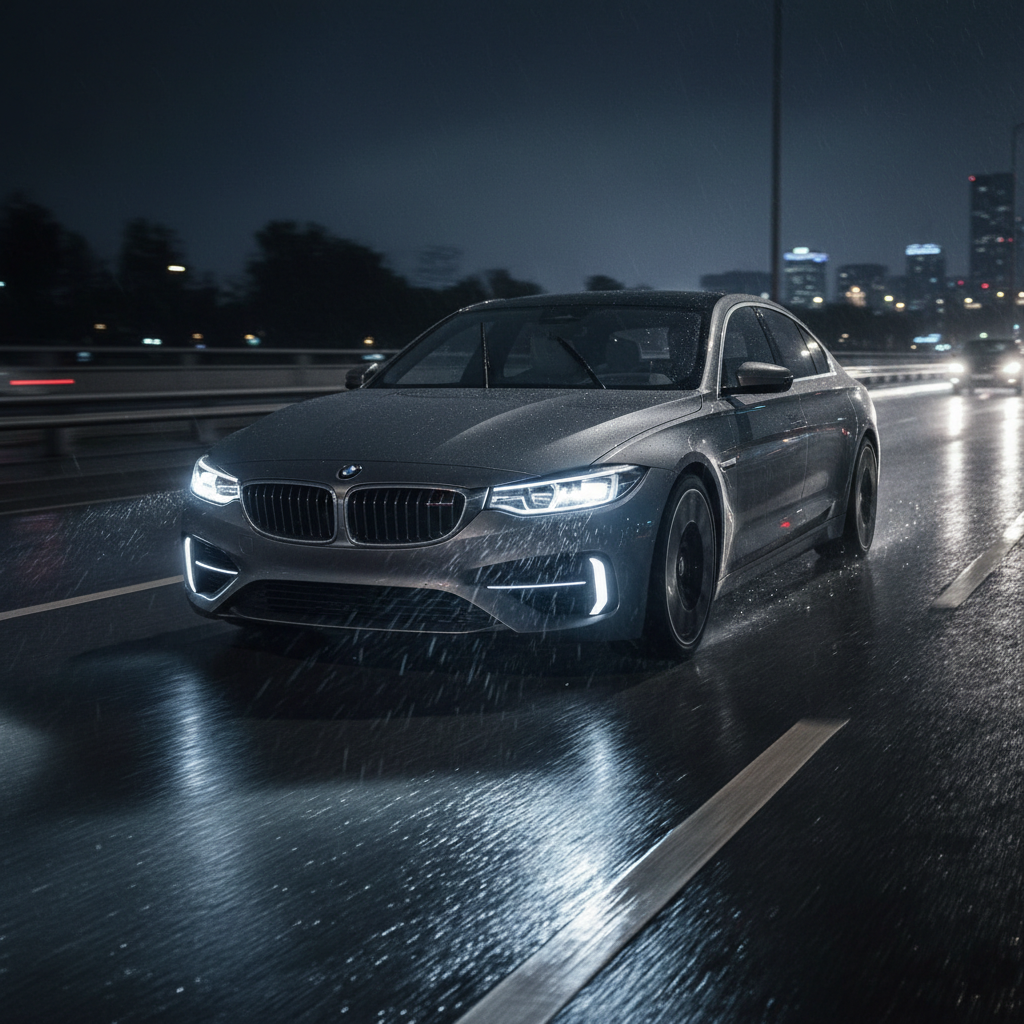
What “bright white” fog lights really mean (and where it can go wrong)
Most “bright white” LED fog bulbs land somewhere around the cool-white range. It looks crisp and modern, and on clear nights it can feel like a big upgrade versus old halogens.
But fog lights have a job: wide, low, controlled light that reduces backscatter. In thick fog, very cool white light can reflect more and feel harsher to your eyes, so the “whitest” option isn’t automatically the most useful.
- Beam control beats raw brightness: a focused, wide cutoff helps you see the road edge without glare.
- Housing matters: reflector vs projector fog housings react differently to LED emitters.
- Color can be a tradeoff: bright white looks great, but many drivers prefer selective yellow in heavy fog.
According to NHTSA, glare from improperly aimed or mismatched lighting can reduce safety for other road users, so “brighter” needs a little restraint and correct setup.
Quick fitment check before you buy (save yourself the return)
Most disappointment comes from buying the wrong bulb type or ignoring how your vehicle’s electronics handle LEDs. Do this quick check first.
1) Find your bulb size and fog housing type
- Common fog bulb sizes in the U.S. include 9005, 9006, H8/H9/H11, H10, 9145, and 5202, but your car may differ.
- Look at the fog light lens: a projector often has a round lens inside, a reflector typically looks open with reflective surfaces.
2) Check for CAN bus sensitivity
Some vehicles throw warnings, flicker, or shut LEDs off if the system detects low power draw. If your car is known for bulb-out warnings, you may need a “CAN bus ready” bulb or an external resistor/decoder.
3) Confirm physical clearance
LED fog bulbs often have a rear heat sink or fan. Measure clearance behind the housing and confirm the dust cap still seals, since moisture is a quiet fog-light killer.
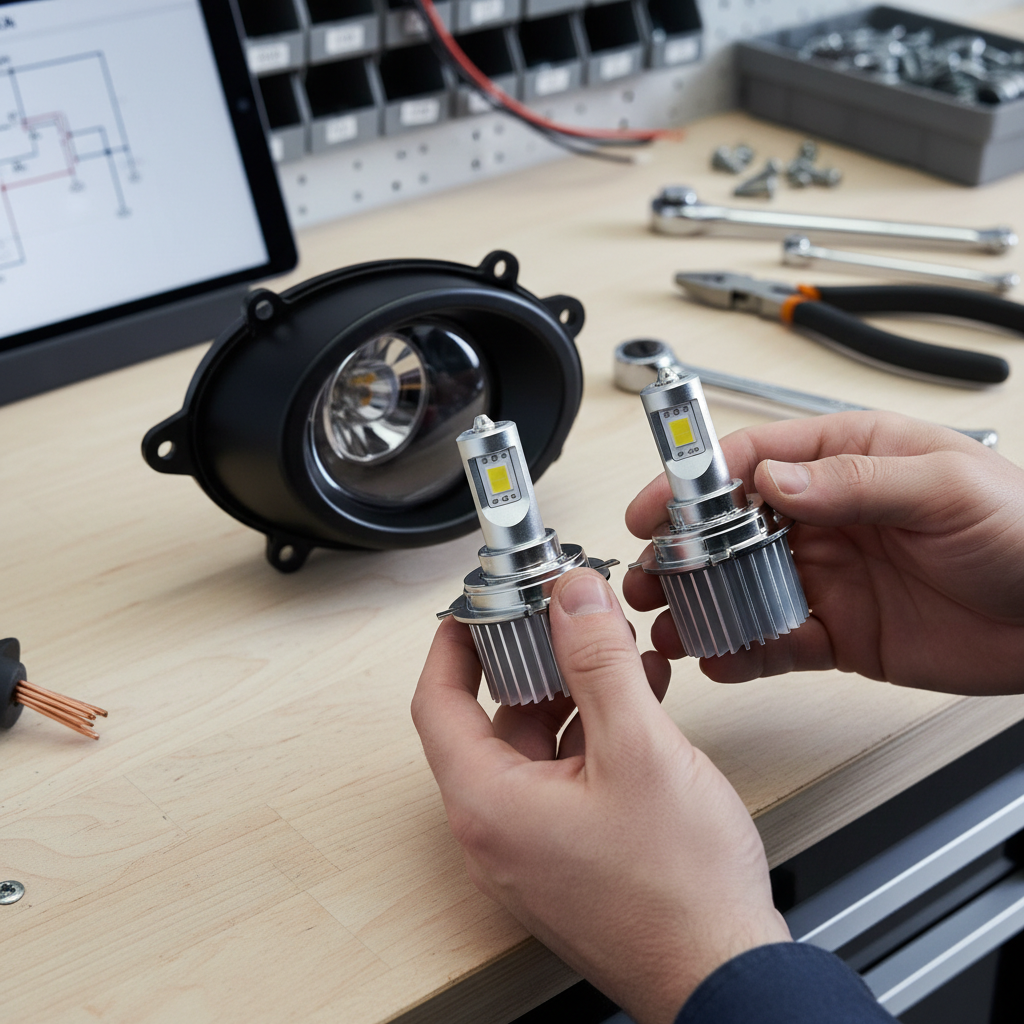
Buying criteria that actually predict a good result
If you’re comparing listings, you’ll see huge lumen claims, “aircraft aluminum,” and lots of buzzwords. Here’s what tends to matter more in practice.
- Emitter position (filament mimic): LEDs should place light where the halogen filament used to sit, otherwise the beam scatters.
- Color temperature range: for bright white, many people target a clean white rather than extreme blue-white, which can be fatiguing.
- Thermal design: stable output needs real heat management, either a quality passive heat sink or a durable fan design.
- Ingress protection: water resistance helps, but sealing depends on your housing and dust cap too.
- Driver quality and flicker control: better drivers reduce flicker and electrical noise.
According to SAE International, proper beam pattern and aim are central to forward lighting performance; even high-output sources won’t help if the optics are wrong for the emitter design.
Bright white vs yellow fog lights: choosing for your driving
People ask this constantly because both camps have a point. Here’s a practical way to decide without overthinking it.
- Mostly city/suburban driving: bright white often looks cleaner and matches LED headlights, visibility feels sharp on wet pavement.
- Frequent rural roads and heavy fog: a warmer color (including selective yellow) can feel calmer and sometimes reduces perceived glare in dense fog.
- Snowy conditions: very cool white can create more “sparkle” off snow, some drivers prefer a slightly warmer tone.
If you want the bright white look, focus extra hard on beam control and aiming, that’s what keeps it useful instead of annoying.
At-a-glance comparison table (what to prioritize)
Use this table like a shopping filter. It won’t pick a brand for you, but it usually predicts whether you’ll like the result.
| What you care about | Look for | Why it matters |
|---|---|---|
| Real-world visibility | Good filament-mimic emitter placement, stable driver | Produces a usable wide beam instead of stray glare |
| “Bright white” appearance | Clean cool-white tone (not overly blue) | Better contrast and less eye fatigue for many drivers |
| No dashboard warnings | CAN bus compatibility or included decoder options | Prevents flicker, bulb-out messages, random shutoff |
| Longer life | Serious heat sink/fan design, quality materials | Heat is what usually kills LEDs early |
| Easy install | Correct base, compact rear profile, clear instructions | Reduces headaches with tight wheel-well access |
Installation and aiming tips (the part people skip)
Even the best car led fog light bulbs bright white can disappoint if installed crooked, touched with greasy hands, or aimed too high. Fog lights should stay low and wide.
Practical steps
- Confirm seating: the bulb must lock fully. A slightly twisted base can ruin the beam pattern.
- Match left/right orientation: many LED bulbs need the emitters positioned left-right (3 and 9 o’clock) to mimic halogen focus.
- Re-aim after install: park on level ground facing a wall, keep fog beam low, below headlight cutoff in most setups.
- Check for heat and clearance: run them for 10–15 minutes, then confirm nothing rubs wiring or the dust boot.
If your vehicle requires bumper removal or tight wheel-liner access, it can be worth paying a shop, not because it’s “hard,” but because broken clips and poor sealing cost more later.
Common mistakes that make bright white fog LEDs look worse
- Chasing lumen numbers: listings often exaggerate, and too much unfocused light just creates foreground glare.
- Mixing mismatched colors: extreme blue-white fog lights under neutral headlights can reduce visual comfort.
- Ignoring lens condition: hazy fog lenses scatter light. Restoring or replacing the lens can be more effective than a bulb swap.
- Skipping electrical checks: flicker can come from poor connections, not just the bulb.
- Using fog lights as “extra headlights”: if you aim them high, you lose the whole point of fog lighting.
According to FMCSA, vehicle lighting issues can contribute to visibility problems in commercial operations; while passenger vehicles differ, the same principle applies: alignment and function matter more than marketing specs.
Key takeaways and a practical next step
If you want a clean modern look, bright white LEDs can be a solid upgrade, but the win comes from fitment, beam control, and proper aim, not from the loudest lumen claim.
Pick your bulb size, confirm housing type and clearance, then shortlist options that mimic halogen emitter placement and include CAN bus support if your vehicle is picky. After install, spend five minutes aiming, it’s the difference between “nice upgrade” and “why did I do this.”
FAQ
Are bright white LED fog light bulbs legal in the U.S.?
It depends on your state and how the bulb performs in your specific housing. Many laws focus on allowable colors and glare. If your bright white setup creates excessive glare or looks blue/purple, it may attract attention. When in doubt, check your state vehicle code or ask an inspection shop.
Why do my new LED fog lights look dimmer than expected?
Usually it’s beam pattern, not power. If the LED emitter doesn’t sit where the halogen filament sat, the housing can’t focus the light, so the road looks darker even if the bulb is “brighter” on paper.
Do I need a resistor or decoder for LED fog lights?
Some vehicles need one to prevent flicker or bulb-out warnings. If you already see flicker, intermittent shutoff, or a warning light, a CAN bus-compatible bulb or a quality decoder often helps, but wiring quality also matters.
What color temperature is best for bright white fog lights?
Most drivers who want bright white prefer a clean cool-white that doesn’t look overly blue. Very cool tones can feel harsher in rain or fog. If you drive in heavy fog often, you might still prefer a warmer color even if it’s less “white.”
Can I put LED bulbs into any fog light housing?
Physically, many will fit, but performance varies. Some reflector housings handle certain LED designs poorly and produce glare. If you can’t get a controlled low beam after aiming, you may need a different LED design or consider a full fog light assembly upgrade.
Why do my fog lights cause glare for oncoming drivers?
Common causes include bulbs not fully seated, incorrect emitter orientation, aiming too high, or a housing that doesn’t focus your LED design well. Start by reseating and aiming, then reassess whether the bulb design matches the housing.
How long do LED fog light bulbs usually last?
It varies a lot by heat management and build quality. LEDs typically last longer than halogens in many setups, but cramped housings and poor cooling can shorten life. If you see rapid dimming, flicker, or color shift, heat is often involved.
If you’re trying to narrow down options for your exact vehicle, or you want a more “install once and forget it” path, it can help to build a short list based on bulb size, housing type, and whether you need CAN bus support, then choose from those instead of shopping by lumen claims.