
How to fix car engine overheating on highway starts with one priority: protect people first, then protect the engine, because an overheated motor can escalate from a warning light to serious damage in minutes.
If your temperature gauge climbs fast at 70 mph, it usually feels sudden, but the causes tend to be predictable: low coolant, airflow problems, a failing fan, or a small leak that only shows up under sustained load. The trick is knowing what you can safely do on the shoulder and what should wait for a shop.
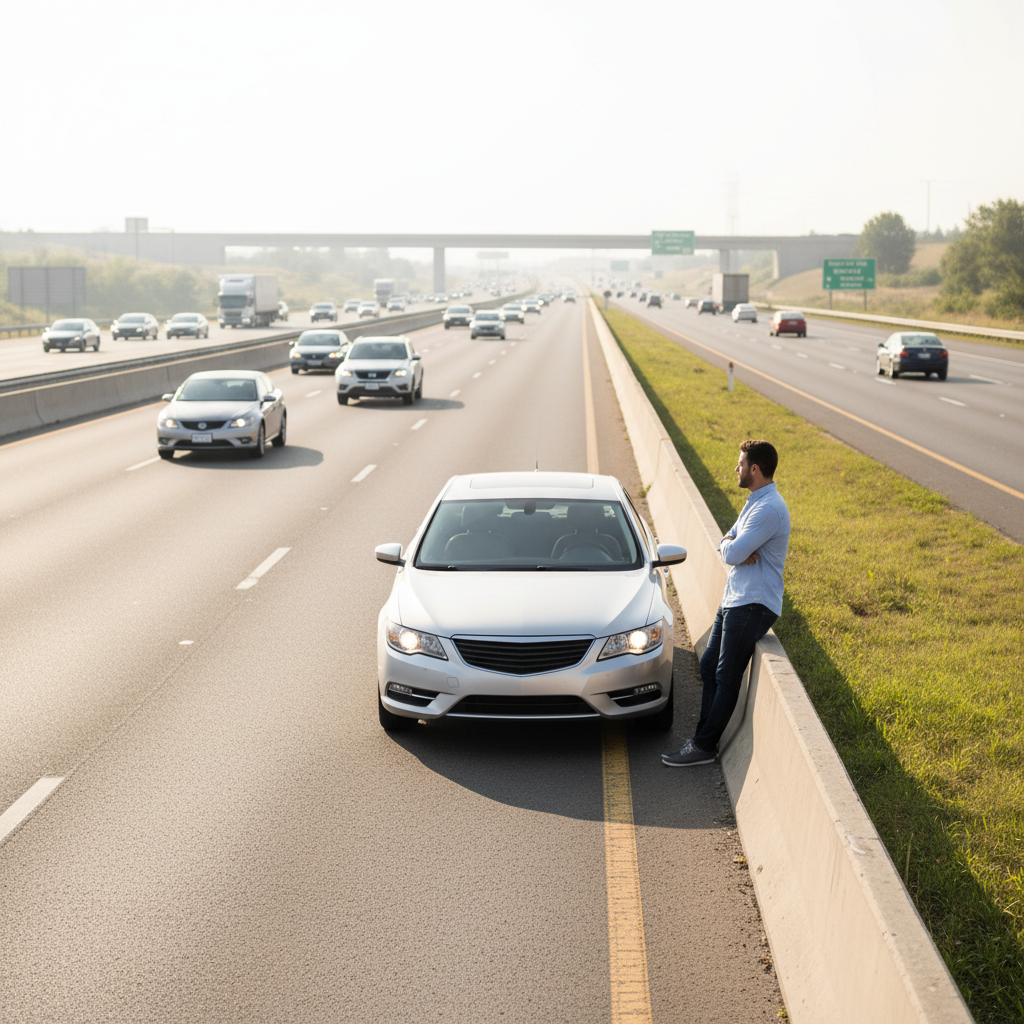
Below is a practical roadside playbook, a quick self-check to narrow likely causes, and a few “don’t make it worse” mistakes I see drivers repeat. If you take only one thing from this guide, make it this: never open a hot radiator cap.
What to do immediately when the temperature spikes
When the needle heads toward hot, assume you need to reduce heat load right away, even before you exit. Most modern cars give you some warning, but they still can overheat quickly under highway load.
- Turn off A/C, set heat to max, fan high. Uncomfortable, yes, but it can pull heat from the coolant through the heater core.
- Ease off the throttle, avoid hard acceleration, and move to the right lane. Higher RPM and heavy load generate more heat.
- Find a safe place to stop: shoulder with room, an exit ramp, or a parking lot. Don’t stop on a blind curve or just past a crest.
- Hazards on, park, and keep the hood closed for a few minutes. If steam is pouring out, stay back.
If the warning says “engine hot, stop safely,” treat it literally. Continuing to drive while overheating can warp cylinder heads or damage the head gasket, and repairs can get expensive fast.
Cool down safely: a simple sequence that avoids burns
Many people rush straight to the radiator cap. That’s where injuries happen. According to NHTSA safety guidance, roadside emergencies are also traffic hazards, so stay aware of passing vehicles while you assess the situation.
Use this cooldown sequence instead:
- Shut the engine off if the gauge is in the red or the warning light is flashing.
- Wait 15–30 minutes before touching anything in the cooling system. Longer if you saw heavy steam.
- Open the hood carefully once things calm down, but don’t lean over the front grille area.
- Do not open the radiator cap. If your vehicle has a pressurized coolant reservoir, only consider checking it after cooldown and only if you can do so safely.
If you smell coolant (sweet smell) or see a puddle forming, you may be dealing with a leak. In many cases, that means you can top off temporarily, but you still need a proper repair soon.
Quick self-check: what you can look for on the shoulder
You’re not trying to “fix everything” on the highway. You’re trying to decide whether you can limp to a safer spot or whether you should call for a tow.
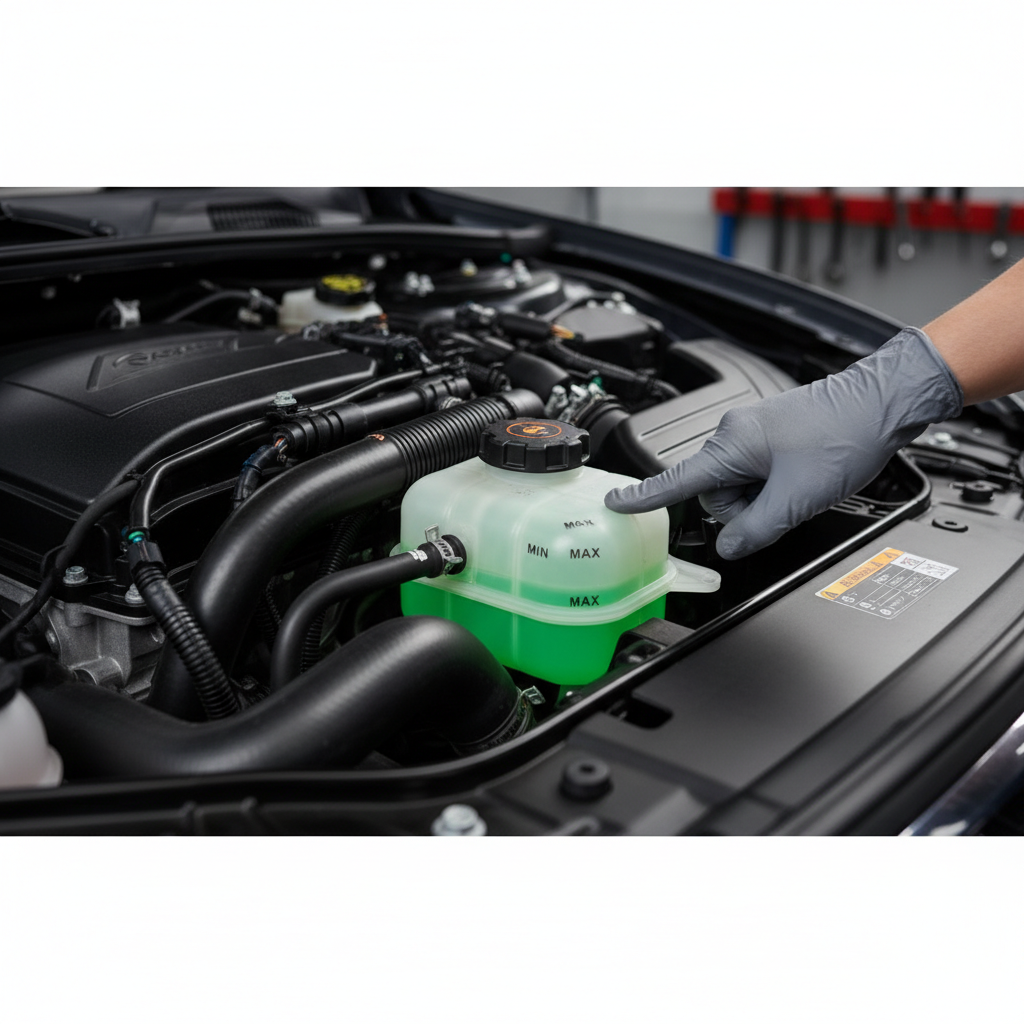
Here’s a practical checklist that usually works across most vehicles:
- Coolant level (after cooldown): reservoir empty or below MIN suggests low coolant or a leak.
- Visible leaks: wet hose connections, dripping under the front, crusty residue around hose clamps or radiator seams.
- Radiator fan behavior: with engine on (only if it’s safe and not overheating immediately), does the fan run when the temp rises? A failed fan matters more in traffic, but it can still contribute after a hot highway pull.
- Drive belt condition: if your car uses a belt-driven water pump, a broken/loose belt can stop coolant circulation. Look for obvious damage, but keep hands away from moving parts.
- Heater output: if you set cabin heat to max and it blows cold, coolant may be low or circulation may be poor.
Common causes of overheating at highway speeds (and what they feel like)
Highway overheating often points to cooling capacity issues under sustained load, not just a fan problem. That said, symptoms overlap, so think in patterns, not single guesses.
- Low coolant from a slow leak: temp climbs gradually, worse on long grades, you may notice sweet smell after stopping.
- Radiator airflow restriction (debris, bent fins): fine around town, hotter on highway, especially in hot weather.
- Failing thermostat: temp swings up and down, may spike suddenly, cabin heat can fluctuate.
- Water pump weakness: overheating under load, sometimes a whining noise or coolant seep near the pump, but not always obvious.
- Head gasket concerns (more serious): repeated overheating, bubbling in reservoir, white exhaust smoke, coolant loss with no visible leak.
According to AAA, if your vehicle continues to overheat after topping off coolant or it overheats again quickly, getting professional help is typically safer than pushing onward.
Roadside “fixes” that are reasonable vs. ones that can backfire
This is the part people search for when they type how to fix car engine overheating on highway. The honest answer: you can sometimes stabilize the situation, but you rarely “repair” the root cause on the shoulder.
Reasonable temporary steps
- Top off coolant (only after cooldown): use the correct coolant if you have it. If not, water can be a short-term stopgap in many situations, but it’s not ideal long-term and may not be appropriate in freezing conditions.
- Re-seat a loose hose clamp if it’s clearly seeped and you can safely tighten it. Don’t burn yourself, and don’t over-tighten plastic fittings.
- Clear visible debris from the grille area if it’s safe and the engine is off, like plastic bags or leaves blocking airflow.
- Drive to safety cautiously if the temp returns to normal: low speed, light throttle, heat on, A/C off, stop immediately if it rises again.
Actions that often make things worse
- Opening a hot radiator cap: pressurized coolant can spray and cause burns.
- Pouring cold water on a hot engine: rapid temperature change can stress components.
- Ignoring the gauge “just to make the next exit”: that’s when minor cooling issues turn into major engine damage.
Decision table: can you keep driving, or should you tow?
If you’re trying to decide your next move, use this as a sanity check. It’s not perfect, but it matches how many shops triage overheating complaints.
| What you see | Likely situation | Recommended next step |
|---|---|---|
| Temp rises, you stop, cool down, top off, then temp stays normal for 15–20 minutes | Low coolant / small leak | Drive to a nearby shop, monitor gauge closely, avoid highway speeds if possible |
| Temp jumps to red quickly and returns quickly, heater blows cold | Thermostat stuck or circulation issue | Limit driving, consider tow if it repeats after restart |
| Steam, puddle of coolant, hose visibly split | Active leak | Tow is usually the safer call |
| Overheats again within a mile after topping off | Major leak or pump issue | Stop driving, arrange assistance |
| Bubbling in reservoir, repeated overheating, sweet smell + white smoke | Possible head gasket problem | Don’t continue driving, get professional diagnosis |
After you get off the highway: practical next steps to prevent a repeat
Even if you manage how to fix car engine overheating on highway in the moment, the real win is preventing the second incident, because the second one often happens when people assume the problem “went away.”
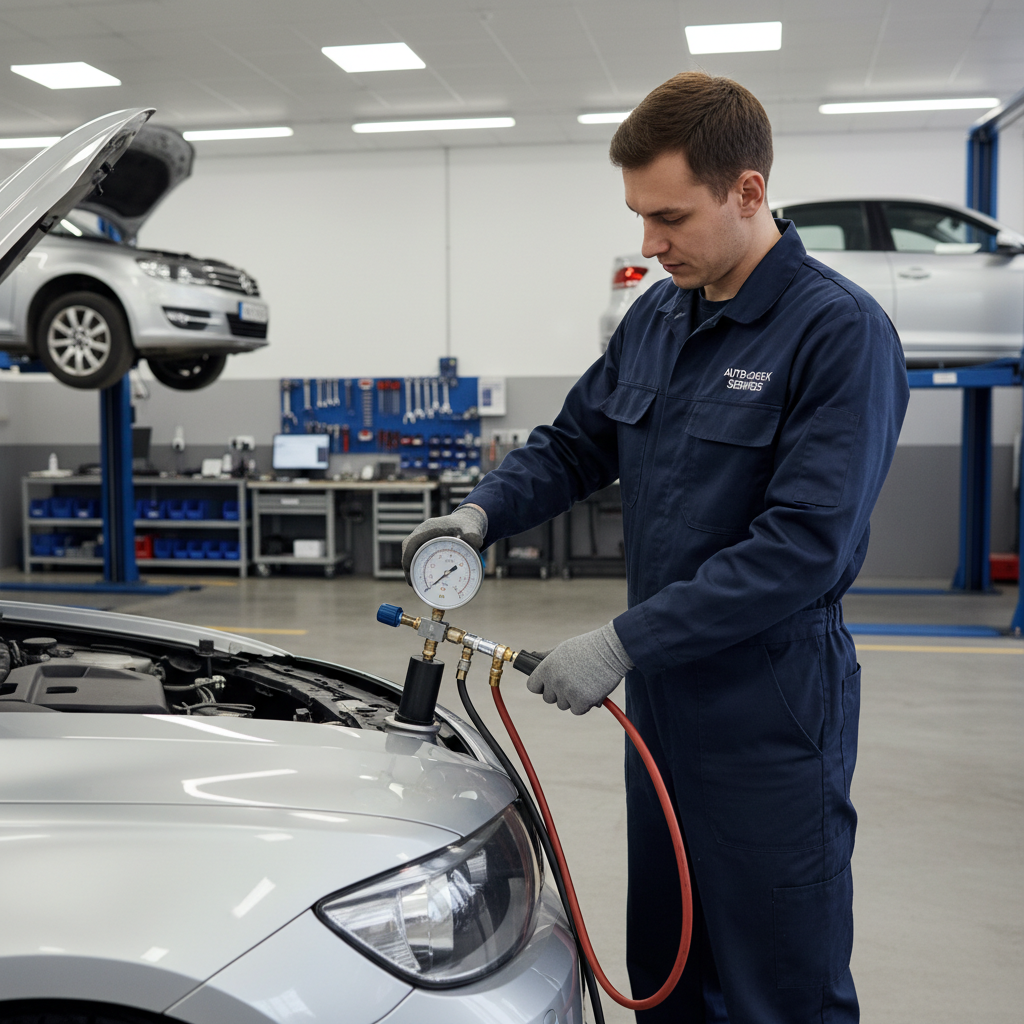
What’s worth doing soon (same day if possible):
- Check coolant level again once fully cold. If it dropped, assume there’s a leak even if you can’t see it.
- Look for dried residue around the radiator end tanks, hose connections, and thermostat housing.
- Ask for a cooling system pressure test. It’s a common diagnostic step that can reveal leaks that only show under pressure.
- Review maintenance items: old coolant, aging hoses, and a weak radiator cap can all contribute over time.
Key takeaways to keep in your glovebox mindset:
- If the gauge is rising, reduce load immediately and plan your stop.
- Cool down first, then check the reservoir, not the radiator cap.
- If overheating returns quickly, a tow often costs less than engine damage.
When to get professional help right away
Some scenarios are just beyond a roadside solution. If any of these happen, it’s smarter to stop and call for help, even if you’re close to home:
- Repeated overheating after topping off coolant
- Any knocking sounds or loss of power while hot
- Coolant mixing signs (milky oil cap, persistent white smoke)
- No heat from cabin heater combined with high engine temp
Overheating can sometimes point to internal engine issues, and diagnosis may require pressure testing, chemical testing for combustion gases, or inspection by a qualified technician. If you’re unsure, err on the side of caution.
Conclusion: a calm plan beats a rushed “fix”
If you remember the sequence, how to fix car engine overheating on highway becomes less scary: reduce load, stop safely, let it cool, check for low coolant or obvious leaks, then decide whether you can drive gently to a shop or whether a tow makes more sense.
Your next action is simple: put a gallon of premixed coolant and a pair of gloves in the trunk, and if overheating happens again, treat it as a sign the cooling system needs diagnosis, not just another top-off.
FAQ
Can I keep driving if my car is overheating on the highway?
Sometimes for a very short distance to reach a safer stopping point, but only if the temperature is not in the red and you’re actively reducing load. If it keeps climbing, stop and shut the engine down.
Is it safe to pour water into an overheating engine?
After the engine cools, adding water to the coolant reservoir can be a temporary measure in many situations. It’s still better to use the correct coolant when possible, and you should avoid opening a hot, pressurized system.
Why does my car overheat only at highway speeds and not in town?
That pattern often points to limited cooling capacity under sustained load, such as low coolant, a partially restricted radiator, thermostat issues, or water pump problems. A shop can confirm with testing.
Will turning on the heater really help cool the engine?
In many cars, yes, because the heater core acts like a small radiator and can pull some heat from the coolant. It won’t fix a major leak, but it can help you buy time to stop safely.
How long should I wait before opening the hood or checking coolant?
Waiting 15–30 minutes is a reasonable starting point, longer if you see heavy steam. You’re aiming for “no boiling, no hissing,” not just “it feels less hot.”
What does it mean if the coolant reservoir is empty but I don’t see a leak?
It can still be a leak that only appears under pressure or while driving, or coolant may be pushed out through an overflow path. A pressure test is usually the next practical step.
Could overheating on the highway mean a blown head gasket?
It’s possible, especially with repeated overheating plus bubbling in the reservoir, unexplained coolant loss, or white exhaust smoke. Because other issues can look similar, professional diagnosis is recommended.
What should I keep in my car for overheating emergencies?
Premixed coolant, a small flashlight, work gloves, and a clean rag cover most situations. If you travel long distances, a basic tool kit can help tighten a loose clamp, but don’t attempt complex repairs roadside.